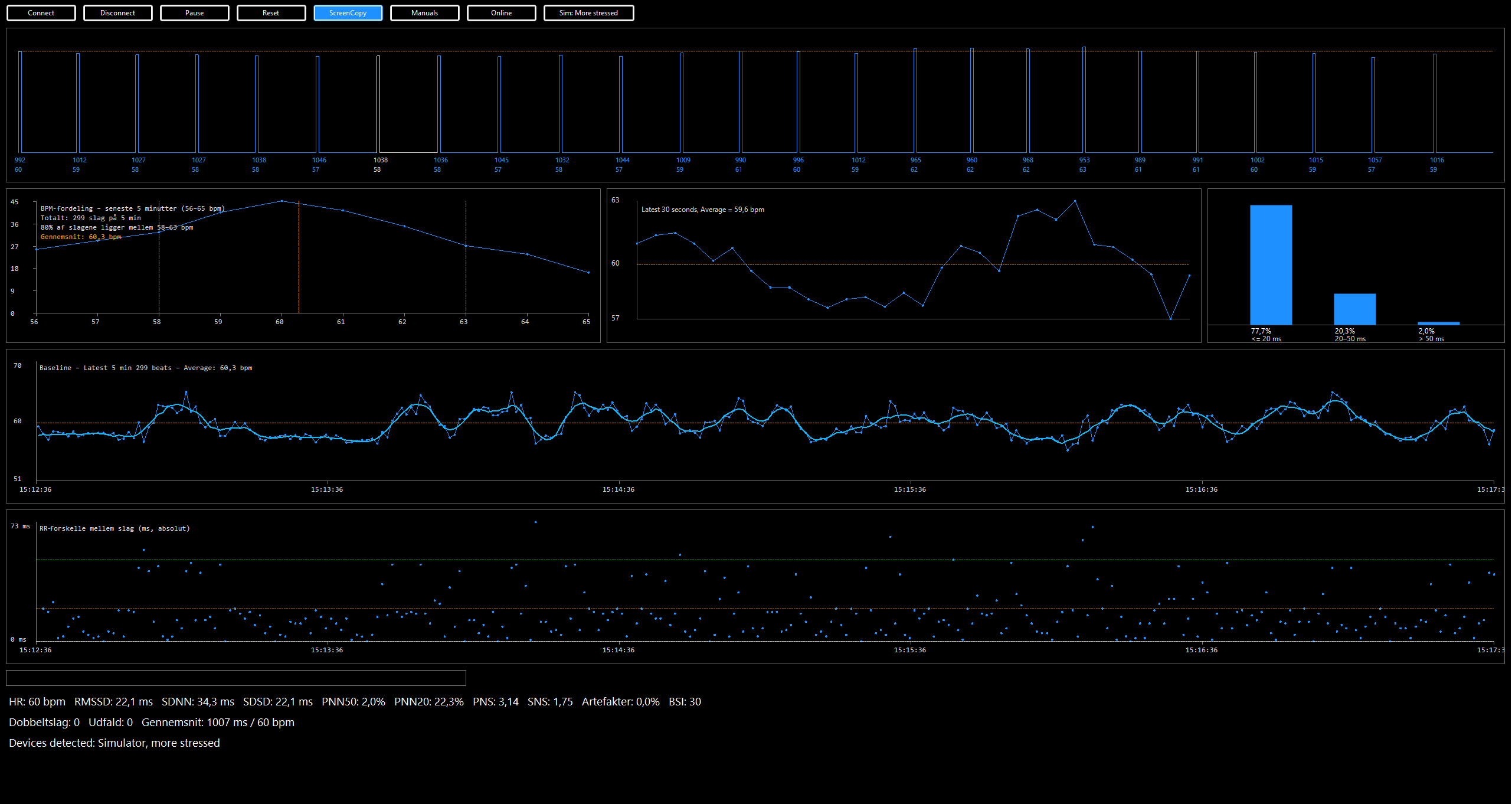
Right-click to translate this page into your own language - or use the translation tool in browsers top-right corner:

We are all stressed - but how stressed are you ? Your heart will tell you.
Your pulse is important, but how your heart is controlled to generate the pulse, is much more important.
Each heartbeat is divided by a time-interval. The shorter this time-interval is, the higher is your pulse. The longer this time-interval is, the lower is your pulse. The tip of the pulse is called the R-point, and the time between two heartbeats is called the Heart Rate Value (HRV or R-R timing).
Each heartbeat-time is controlled by two nervous-systems. One nervous-system (parasympathic) controlling restitution, digestion, etc. will aim to make your heart work slower. The other nervous-system (sympathic) controlling fight and flight response, will aim to make your heart work faster. Between each heartbeat these two nervous-systems will try to argue which one of them should control the next heartbeat. Therefore the time between heartbeats is constantly going up and down.
For a young and non-stressed heart, both nervous-systems win the right to control the heart on a fifty-fifty basis, and the heart will have a clear variation in the timing between the beats. The time can easily vary between 20 milliseconds or less to 100 milliseconds or more from beat to beat.
Daily and throughout life, we are exposed to situations that stress the body, the nervous-system and the heart: Love, marriage, arguments, alcohol, cigarettes, drugs, sickness, operations, restitution, divorce, financial challenges, custody of the kids, job environment, being fired, getting a new job, moving, traffic, losing friends and family, sleep, etc. Over time we might store the frustration in the body - in the nervous system - which controls the heart.
Each persons situation and possibility to tackle it all is different. In order to help you cope with the many challenges, the parasympatic nervous-system trying to calm you down, will take over the control of the heart more and more, meaning that the time between the heartbeats will gradually become more tight with less variations.
See the simulation below. Click the button to change from less to more stressed.
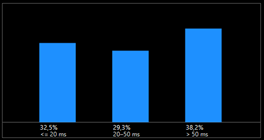
A less stressed heart
Many variants over 20 ms
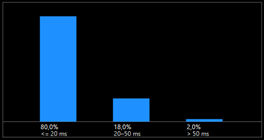
A more stressed heart
Few variants over 20 ms
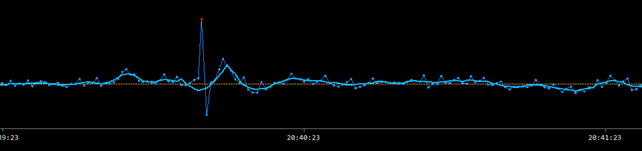
Over time, the heart might begin to produce double beats, called Extrasystoles. Extrasystoles are extra/premature heartbeats that occur before the next normal beat is due. A double beat is often followed by a timing-adjusting pause which you feel like the heart makes a pause, a flutter, or a strong thump in the chest. Nobody really knows why the extra beat occurs, but the LinTronic theory is that the sympatich nervous-system, is not happy about the parasympatich nervous-system winning so many heartbeats, that it kicks in from time to time, like it would say: I am still here.
Extrasystoles - which are shown as short spikes in the pulse - are not dangerous but might cause you to get anxious which creates more stress.

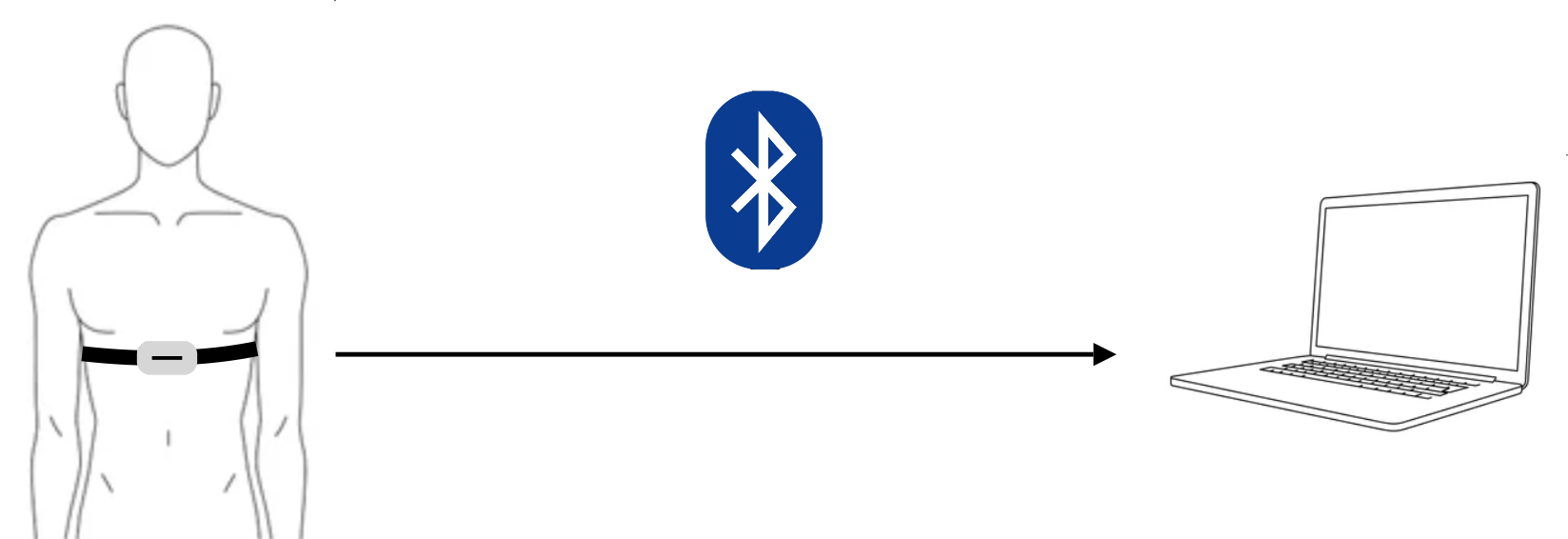
LinTronic have developed a Windows 10/11 HeartRateValue Monitor program, which allows you to read and document your heart in the privacy of your home, while watching tv or reading a book, using a standard chest-strap (Polar H9, Polar H10, Garmin HRM200 - more can be tested/added). No exercises are needed, in fact it works best when you rest.
All heartbeats and RR-timing are recorded in Excel-ready text files and the program can re-run the recording in real-time, so you can show your doctor.
Being aware of your heart and managing your stress is importart, hence a wide number of well-known and recognized index numbers is calculated from your heart beats telling you exactly about your heart. These numbers are for example RMSSD, PNN20, PNN50, PNS, SNS and BSI (used to monitor astronauts). The manual explains these numbers.
The LinTronic HRV computer program helps you to to become more aware, document your hearts behaviour, understand double beats nature, focus on your mental health, letting go of negative thoughts/stress, increase/adjust the frequency of physical and mental training and sleep, allowing your heart to become more relaxed and reduce your blood pressure.
Full screen copy.